
How to Adjust Your Fertilizer Program: Alternate vs. Simultaneous Feeding
When planning an effective fertilizer program, one crucial consideration is whether to apply nutrients alternately or simultaneously. Each approach has its benefits and challenges, and choosing the right one can optimize nutrient availability, reduce compatibility issues, and enhance plant health. This guide explores how to adjust your fertilizer program for success using either method.
Understanding Alternate Feeding
What is Alternate Feeding?
Alternate feeding involves applying different fertilizers or nutrient solutions at separate times. For example, you might provide a calcium-rich fertilizer during one watering cycle and a magnesium-rich fertilizer during the next.
Benefits of Alternate Feeding:
- Prevents Incompatibility: Some nutrients, such as calcium and phosphorus, can form insoluble precipitates when mixed. Alternate feeding avoids these reactions.
- Customizable Applications: Adjust the timing and concentration of specific nutrients based on plant needs and growth stages.
- Improved Nutrient Uptake: Reduces competition between nutrients during absorption, ensuring plants can fully utilize each application.

Challenges:
- Increased Management: Requires careful planning and monitoring to maintain a balanced nutrient supply.
- Time-Consuming: More frequent applications may be necessary.
Understanding Simultaneous Feeding
What is Simultaneous Feeding?
Simultaneous feeding applies all required nutrients in a single solution. This method simplifies fertilizer application but requires careful product selection to prevent chemical incompatibilities.
Benefits of Simultaneous Feeding:
- Saves Time: Reduces the number of applications, making it more efficient for growers with large-scale operations.
- Simplified Management: Provides all nutrients at once, streamlining the feeding process.
- Consistent Nutrient Supply: Ensures plants receive a balanced mix of nutrients during each feeding.
Challenges:
- Risk of Incompatibility: Mixing incompatible fertilizers, such as calcium nitrate with phosphates, can lead to precipitate formation and clogged irrigation systems.
- Reduced Flexibility: Limited ability to adjust nutrient levels for specific growth stages.
Adjusting Your Fertilizer Program
Key Considerations:
- Know Your Nutrients: Understand which nutrients are incompatible. For example, calcium should not be mixed with sulfates or phosphates.
- Test Water Quality: High levels of bicarbonates or other impurities can exacerbate compatibility issues.
- Monitor Plant Needs: Regularly assess plant health and growth to determine if adjustments are necessary.
Best Practices:
- For Alternate Feeding: Use separate stock tanks and irrigation cycles for calcium-based and phosphate-based fertilizers. Maintain a consistent schedule to ensure plants receive all required nutrients.
- For Simultaneous Feeding: Choose fertilizers specifically designed for compatibility, such as Plant-Prod’s line of products, which are formulated to minimize precipitation and maximize solubility.
Plant-Prod Solutions for Fertilizer Compatibility
Plant-Prod offers a range of water-soluble fertilizers that support both alternate and simultaneous feeding programs:
- Plant-Prod Chelated Micronutrient Mix: Designed for compatibility with a variety of fertilizers, ensuring essential micronutrients remain available.
- Plant-Prod Calcium Nitrate: A highly soluble source of calcium that works well in alternate feeding programs.
- Plant-Prod Complete 17-5-17 An all in one fertilizer suitable for simultaneous feeding, ensuring plants receive macronutrients and micro elements in every application.
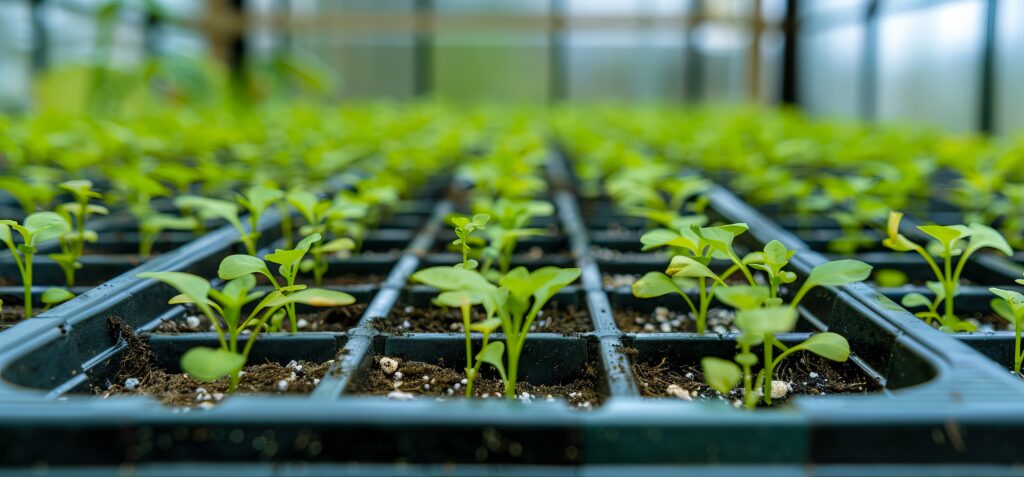
Choosing the right feeding method can make all the difference in your fertilizer program’s success. Whether you prefer alternate or simultaneous feeding, Plant-Prod offers the solutions you need to keep your crops healthy and productive.
Ready to optimize your fertilizer program? Visit our distributors page to find a supplier and discover how Plant-Prod’s innovative products can help you achieve outstanding results!